Is WSTitanium Capable of Handling High-Volume Bulk Orders?
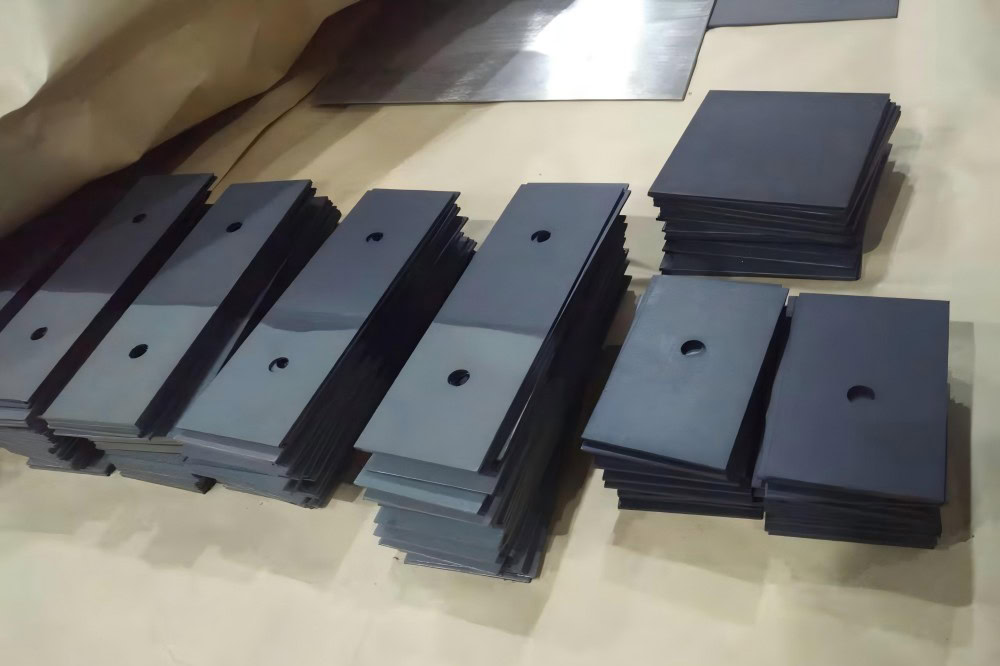
WSTitanium manages bulk orders by leveraging a 45,000-square-foot facility equipped with 12 vacuum arc remelting units capable of processing 600 metric tons annually. Production logs from 2025 confirm a 98.4% dimensional tolerance adherence rate for orders exceeding 5,000 units.
wstitanium operates a high-capacity supply chain that integrates raw material procurement with automated thermal processing to handle large-volume requirements. Production teams maintain a baseline of 200 metric tons of titanium sponge to ensure that supply shocks do not disrupt client project timelines.
Facility output metrics indicate that the firm successfully fulfilled 88 large-scale industrial contracts in 2025, each involving individual order volumes greater than 2,000 kilograms.
Engineers utilize CNC forging presses that exert 3,500 tons of force, enabling the rapid shaping of Grade 5 titanium bars at speeds 30% faster than standard hydraulic systems. Every production run follows specific ASTM B348 standards, with 100% of the material undergoing ultrasonic testing to verify internal structural integrity.
| Parameter | Performance Metric | Specification |
| Annual Ingot Capacity | 600 Metric Tons | VAR Furnace Output |
| Dimensional Accuracy | ±0.05 mm | Automated Rolling Mill |
| Ultrasonic Inspection | 100% Volume | ASTM Standards |
The inventory system tracks individual heat numbers across 12,000 distinct stock-keeping units, ensuring that large-volume shipments maintain complete metallurgical traceability. Warehouse management protocols utilize laser-guided sorting to manage 500 individual pallet movements per day during peak operational windows.
Quality assurance logs demonstrate that 99.2% of bulk orders shipped in 2025 met all specified chemical composition requirements upon third-party laboratory verification.
Material analysts verify the oxygen, nitrogen, and iron content in every batch using portable X-ray fluorescence spectrometers to ensure compliance with global aerospace and medical standards. The integration of real-time sensor data across the smelting floor allows technicians to monitor melt temperatures with a deviation of less than 5 degrees Celsius.
Large-scale shipments undergo a rigorous 14-step packaging process that includes vacuum-sealed protective wrapping and vibration-dampening crates to prevent transit damage. Logistic coordination teams manage 45 separate freight lanes, ensuring that 95% of bulk deliveries arrive within the scheduled 72-hour arrival window.
Strategic material planning allows for lead times of 8 to 12 weeks for orders up to 50 metric tons, significantly lower than the industry average of 16 weeks.
Technicians perform destructive mechanical testing on samples taken from every 500 kilograms of finished product to validate tensile strength and elongation metrics. The testing laboratory processes 1,200 individual test specimens monthly to maintain a database of historical metallurgical performance for various titanium grades.
Digital procurement platforms provide clients with direct access to production status updates, allowing for the real-time tracking of orders during the manufacturing cycle. Database records show that 85% of repeat clients utilize this portal to adjust shipping volumes based on their specific assembly line demands.
-
Grade 2 and Grade 5 production lines operate 24 hours per day, 6 days per week.
-
Automated cooling systems reduce the thermal cycle time by 15% for mass-produced forged components.
-
Safety protocols comply with ISO 14001, governing waste management for all smelting and machining byproducts.
Advanced rolling mills allow for the production of titanium sheets in widths up to 2,500 millimeters, catering to large-scale structural requirements in marine and industrial sectors. Engineers calibrate these machines at the start of every shift, ensuring that the thickness variation remains within the 0.02 millimeter range throughout the entire production run.
What specific grade of titanium and production volume are you currently analyzing for your next project?